WILDLIFE VOLUNTEERING: THE RED FLAGS MOST PEOPLE MISS
Get the free guide

Martin Coombes
- Okavango Wilderness Project
- Phinda Wildlife Research Project
- The Vikela Kruger Conservation Experience
- Moholoholo Wildlife Rehabilitation Centre
Country
🇬🇧 United Kingdom
Length of trip
49 Nights
Travel year
2026
When I originally thought about this experience, I planned on travelling for two months, but I didn't really know at that point what I was going to do. When I discovered African Conservation Experience (ACE) and spoke to the team about the different options, we worked out what I could do within my budget and all the cool experiences I could have. I was quite excited that, rather than doing one project for two months, I could do four different projects across seven weeks!
ACE made everything very easy. I could decide which projects I wanted to do and they facilitated all of the transfers. Everything was very clearly laid out, including exactly where I was supposed to be and at what time, so that took all of that worry away.
On my very first day, I met a family from Ohio who were travelling with ACE for their tenth year in a row. I remember thinking that if they had been doing this for ten years on the trot, then I clearly hadn't chosen something dodgy, weird or bad! That was a good first sign, and my experiences over the following seven weeks confirmed it.
I started in Botswana on the Okavango Wilderness Project, before travelling to South Africa for the Phinda Wildlife Research Project, Vikela Kruger Conservation Experience and finally Moholoholo Wildlife Rehabilitation Centre. I really liked experiencing four different projects because they were all so unique.
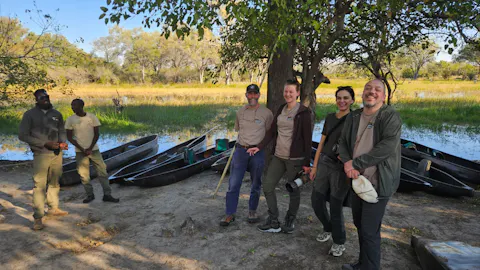
It was really cool to be thrown in the deep end in Botswana. We were out in the bush, living in canvas tents and doing a little bit of hardcore camping with cold showers, being based in the middle of nowhere.
In the Okavango, I remember all the frogs at night. You never saw a single frog, but you could hear millions of them doing their ribbit-y noises. It was quite relaxing, actually.
Going out on the Mokoro boat trip was incredibly relaxing too. You're sitting there with the water right beside you and water lilies all around you. It's also a nice way to see an elephant!
The work in Botswana involved mostly monitoring animals and logging what we saw to help with their protection. We were largely vehicle-based, whereas at my second project Phinda, we got out more because there was more physical work to do, like putting up camera traps and insect traps. We were setting up insect traps to test whether the area was suitable for pangolin release, which felt really valuable.
It was interesting seeing the differences between the reserves too. Phinda is a closed reserve, whereas Balule (the base for the Vikela project) is an open reserve, and there was definitely a difference in the frequency of animals, how things worked and how wildlife had to be managed.
I was able to experience rhino horn-trimming at both Phinda and Vikela, and it was interesting comparing how the different reserves approached it. The actual procedure was very similar, but the way the reserves funded and organised the work was different. Neither gets government funding, so it was interesting learning how different reserves use their money and find sources of revenue to make sure they can keep on top of managing the animals on their properties ethically.
At Vikela, the staff did a great job of teaching us as we went along. If we saw an important plant, our guide would get out, let us have a feel of it and tell us a little bit about its history, how people used it or why it had a weird name. He even gave us a fun quiz at the end. I struggled a little bit with that, although I enjoyed making notes as we went along!
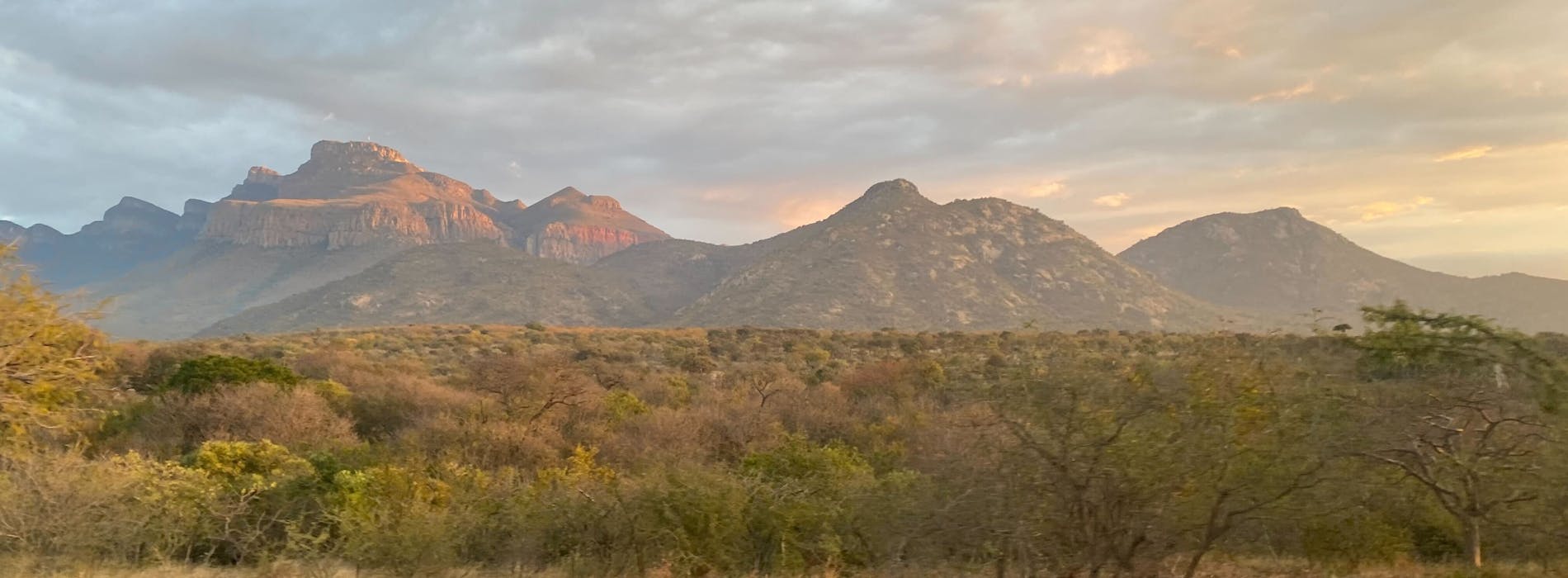
We also did little hikes through the bush, tracked animals and slept outside overnight. I remember sleeping out in Balule on a roll mat, just staring at the sky. There was no light pollution, and the only noises you could hear were the animals.
There were lots and lots of little moments like that rather than one big memory.
It was also interesting hearing about the difficulties and nuances surrounding poaching. People in local communities still need to survive and make money, and poaching can seem like a reasonably straightforward way of doing that when their own lives are really difficult.
One of the biggest things I learned over the seven weeks was that conservation is much more complicated than it sometimes looks on television. There are many shades of grey. A lot of very difficult decisions have to be made, and this experience opened my eyes to that.
I think television doesn't really give you the true picture of the reality of the situation and the difficult decisions that have to be made. You don't see the hours of planning, financials, budgeting, negotiations or the fail-safes it takes to help these animals. At Moholoholo, for example, we saw a giraffe that had to be put down. Of course, you would love for a vet to come out, heal the giraffe's leg and for it to become a success story, but the reality was that the giraffe probably wouldn't have had a good quality of life. As sad as it was, sometimes the best decision for the animal isn't the outcome you would have hoped for.
It was the same lesson about wild animals that people have raised as pets. They start doing things the owners weren't expecting, like tearing up furniture or eating their pets, and then Moholoholo can't necessarily release that animal into the wild because it doesn't know how to survive in that kind of environment.
Moholoholo was completely different to all the other projects, and I think it was a really good one to finish with. It was hard work, but really interesting and worthwhile.
There are some jobs you have to do before you've even had breakfast! Some of the work could be quite gory too. I'm not particularly squeamish, but I won't normally watch really gory horror films. Yet there I was preparing chicks for the animals without gloves! You see the staff getting on with it and realise that these animals have to eat, so you just get on with it too. It’s almost like a badge of honour once you do!
I also really enjoyed getting to know some of the individual animals. One of the servals was amazing. Towards the end of my time there, she had been dragging her bottom across the floor, which could potentially be a sign of parasites. I was keeping an eye on whether she had been to the toilet and managed to find a sample. Hopefully it wasn't anything serious, but it made me feel like I'd contributed to the welfare of that animal.
I had also never heard of a bateleur before travelling there, and now I can say they're one of my favourite birds. They're beautiful, and I particularly enjoyed working around one of them in Moholoholo’s care. The first time I refilled his water tub, he climbed straight into it while I was trying to scrub it. I eventually gently put the hose over him because he clearly wanted to be in the water. It was really fun.
I even did a bit of weeding in the new vulture enclosure. It's a massive job, and three volunteers working for three hours weren't going to finish it, but I managed to clear an area about the size of a table under one of the trees!
I've been really impressed with all the people I've met, from the guides to the chefs and project staff. There are so many really good, compassionate people who facilitate all of this and make it happen.
They would be doing this work even if there weren't volunteers, and it's really heartwarming to see that there are people working with wildlife who have actually made it their lifestyle. Everybody was so supportive, enthusiastic and dedicated to the work they were doing, and it's quite inspiring to see.
I don't think I would have had access to these places without ACE. I wouldn't have known how to go about organising it myself.
Probably one of the most valuable things I learned was something about myself: I don't need lots of material things.
Living more simply for several weeks was nice. You're just managing with the clothes in your bag and the toiletries you've brought with you. I was also getting up much earlier and going to bed much earlier, and that actually felt quite good. I think that's something I might take home with me.
If I go somewhere, I want to see and do as much as possible. I don't just want to be in an all-inclusive hotel. If it's a city break, I want to see the architecture; if it's Costa Rica, I want to see the animals; if it's Iceland, I want to see the geology.
This experience made me realise that volunteering is still a bit like a holiday because you're away from home and not at work, but it's a holiday with more purpose.
If I had to give one message to somebody thinking about travelling and doing conservation work, it would be to just bite the bullet and do it. I would totally, absolutely do it again. I'd definitely consider volunteering holidays in the future, and I'd definitely go with ACE again.


Feeling inspired by Martin Coombes's experience?
Learn more about our Sabbaticals & Career Breaks, Study & Career Programs or Volunteer Experiences
Stories, tips, recommendations – they’re the glue that binds our community together. So if you’re planning your trip, why not hear what previous travellers have to say?