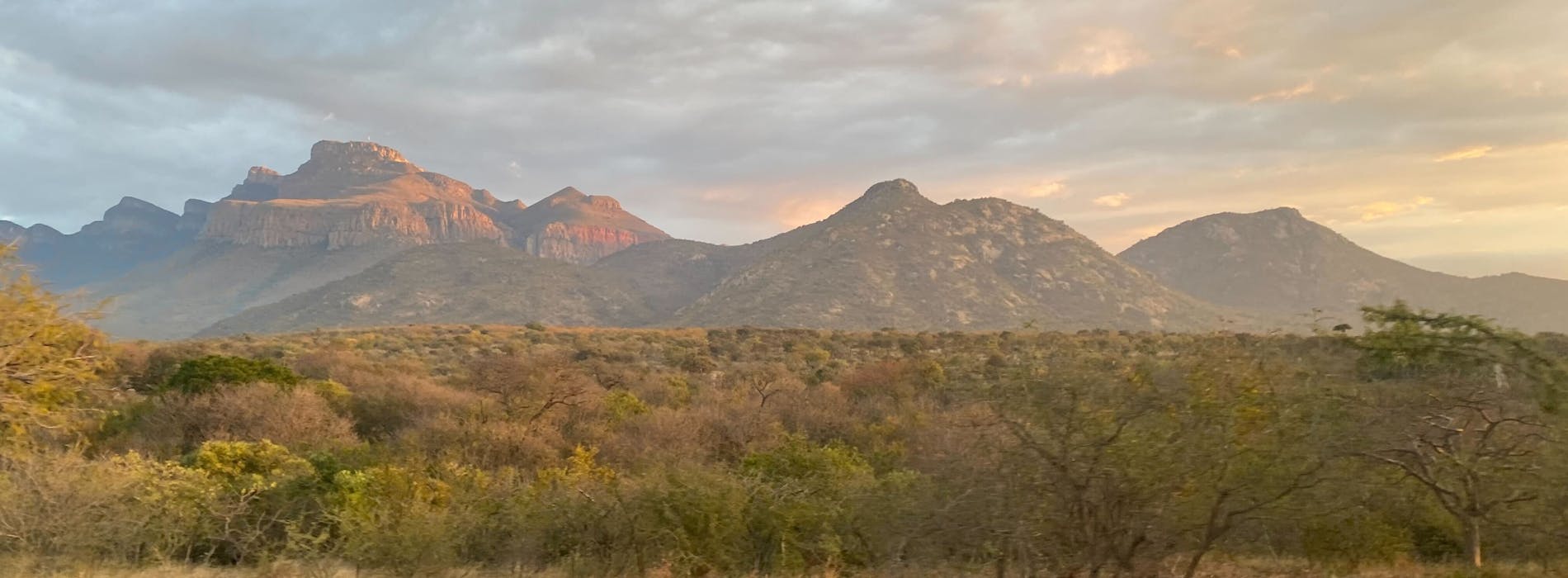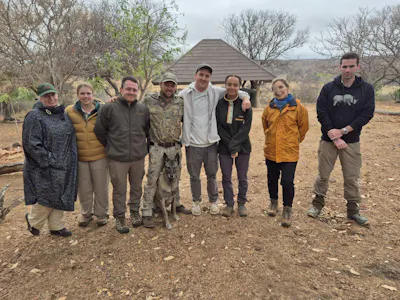

Phinda was where my trip began, and the ecological monitoring team was skilled and utterly dedicated. No two days were the same, and the unpredictability of working with wild animals made every morning feel unique, with the possibility of what we were going to come across.
If I had to single out one moment from the entire trip, it would be the rhino horn trimming. This is an anti-poaching method, where they remove part of the rhino’s horn in order to deter poachers. The reserve manager briefed us beforehand and had our complete attention. Then we were off, clinging to the bakkie (South African term for a pickup truck) as it moved through the bush. The adrenaline was extraordinary. A cow and calf had been sedated not far apart, and we were able to watch both procedures unfold almost simultaneously.
What struck me most was the sheer size of the rhinos and the heaviness of their breathing. And then once the chainsaws started, I hadn't prepared myself for that sound, or for what it would make me feel, witnessing the vet take the horn off. Then I was also able to take part in several of the processes that are mandatory by state law. For instance, I took hair from the calf's tail, for DNA purposes, watched the vets draw blood, and also took part in the rhino's ear-notching.