WILDLIFE VOLUNTEERING: THE RED FLAGS MOST PEOPLE MISS
Get the free guide
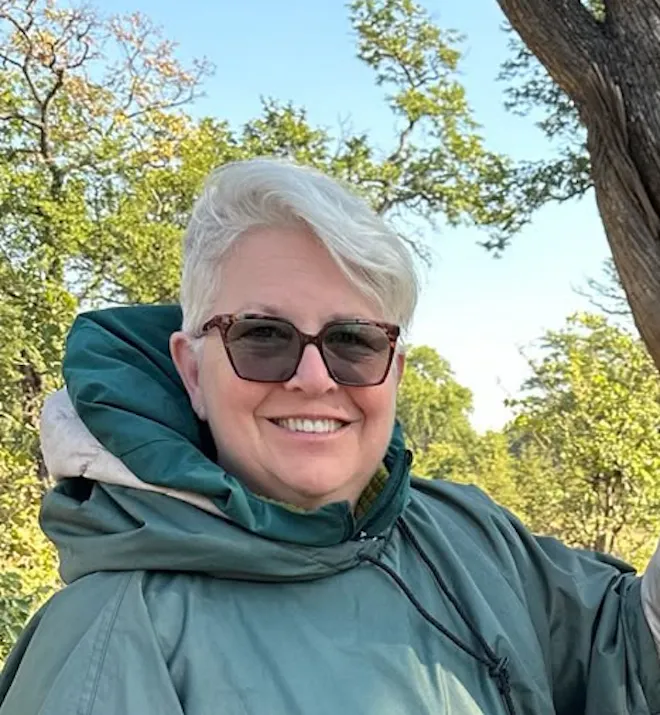
My three weeks volunteering with African Conservation Experience (ACE) were genuinely life-altering. Looking back, I only wish I could have stayed longer.
Before I booked, I spoke with an ACE team member, and they took the time to really understand what I wanted from my trip. Before I organised my call with ACE, I had already done some research into the different options. The "rhino ratings" on the website, for example, really helped me understand how physically demanding each project would be. My dream was to celebrate my 65th birthday in Botswana, and the ACE team were able to rearrange my itinerary so that it happened exactly as I had hoped.
Throughout the whole booking process, I felt like I was the priority, and the things I wanted to see and do were absolutely valued and respected.
During my trip, the in-country ACE team were just as fantastic. They were always there when I arrived or departed, checked in regularly, and made me feel completely supported throughout my time in Africa. I felt comfortable reaching out to the in-country team because of how personable and easy they were to speak with. When you are in a foreign country, if you're feeling hesitant or nervous, it can colour the whole experience, so having somebody you’ve already met to touch base with was a huge blessing.
I spent my first week at Phinda Wildlife Research Project before travelling to Botswana for two weeks on the Okavango Wilderness Project.
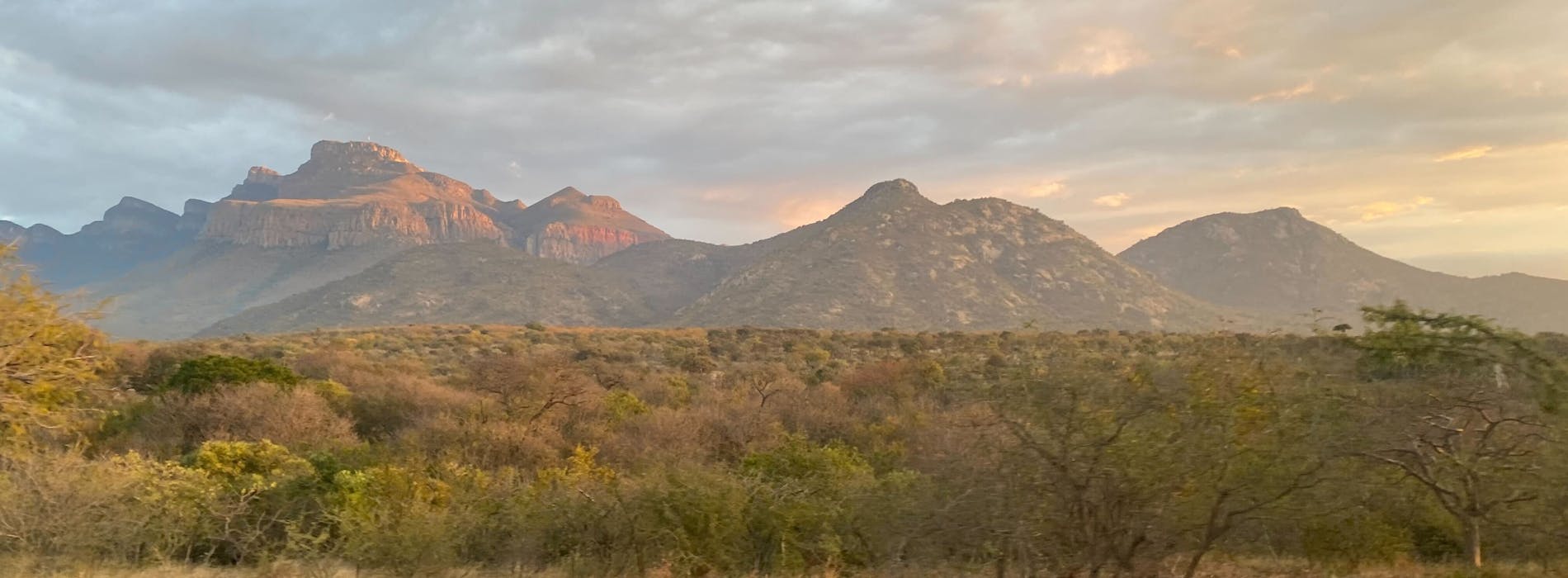
The Okavango and Phinda projects were very different experiences, but equally memorable. Phinda had red iron-rich sand, red termite mounds, open grasslands and dense bush, all of which gave it such a different feel to my time in the Okavango, and seeing the animals there was just marvellous.
There were four of us sharing the volunteer house at Phinda, and between us we had a mix of Italian, British, Australian and Canadian nationalities. I remember thinking, "We're all living out of the same fridge, why don't we cook together too?" So every evening, two of us cooked while the other two cleaned up. No one told us we had to do this, we just chose to! I think that's one of the reasons we bonded so well. We worked together all day putting out camera traps, making sure every camera was positioned in the right way and going out on survey drives. Then we'd spend the evenings eating each other's cooking, talking about our day and sharing the whole experience together. We all had our own private rooms too, which I really appreciated. I'm not the biggest extrovert in my private life, so it was lovely having my own space when I wanted it, but equally lovely having people I genuinely wanted to spend time with.
The back deck became one of my favourite places. You could sit with a drink, watching warthogs wander past while the birds scolded them for getting too close to their babies. Impala and baboons strolled by, and you could often hear the anti-poaching dogs nearby too. It just felt like you were living right in the middle of nature.
The work itself was fascinating. We helped set camera traps and monitor wildlife, but we also learned about Phinda’s buffalo project, where they're looking at using buffalo to naturally turn over the soil and reduce dense thorn thickets so more grass can grow for other wildlife.
I loved that everything had a purpose and that the research was looking at the whole ecosystem.
One of my favourite memories was tracking a pangolin after it hadn't pinged on its transmitter for a couple of days. Hiking through the bush to make sure it was safely tucked away in its burrow was pretty awesome.
The experience at Phinda that really stuck with me was helping the veterinary team with a leopard. They originally thought the female leopard had mange (a skin disease impacting big cats and other mammals), but when she wasn't improving, the vet returned to carry out biopsies. We gently slid her onto a blanket, lifted her into the vehicle, and after the procedure, carried her into the shade so she could recover.
What struck me most wasn't just how exciting it was, but seeing first-hand how genuinely committed the team is to caring for every individual animal.
Our project leader was really knowledgeable about birds, which I absolutely loved. She was just as excited to stop for birds, plants and spiders as she was for the bigger animals. I found these amazing golden orb spiders that were the size of the palm of my hand, and while everyone else stayed on the vehicle, I was more than happy to climb down and photograph them. She never rushed us and always encouraged our curiosity, no matter what caught our attention.
One of the things I loved most about Phinda was how much time we spent in the bush. We'd usually leave around 6:30 in the morning, come back around lunchtime, then head out again until seven in the evening.
You're immersed in nature for seven or eight hours every day, and because of that, you have so many more opportunities for authentic wildlife encounters than you would on a normal safari.
Phinda was a genuinely wonderful experience. The research, the wildlife, the people and the sense of community all came together to create something really special. You get as much as you put into this experience, and I had the best time.
I then headed to Botswana for my final two weeks on the Okavango project. The remoteness of the Okavango Delta was unlike anywhere I've ever been. I loved being completely off-grid, with everything powered by solar energy and very little technology. It felt like we were contributing to conservation without adding to the problem. I loved staying in my own safari tent with a private bathroom, and even the famous bucket showers turned out to be a fantastic experience!
What made Botswana so special was understanding how the monitoring work we were doing directly contributes to conservation. Speaking with Dr. Christiaan Winterbach about how the data we collected feeds into government management made me realise that every single transect has real value.
You're not just driving through the bush looking for animals. You're recording habitats, vegetation, wildlife sightings and environmental changes that genuinely help protect the ecosystem.
Every day felt like a National Geographic documentary. We watched lions feeding on an elephant that had died of old age, witnessed lions bringing down a giraffe, spent time with African wild dogs, saw buffalo, elephants and countless other species, and even discovered a tiny chameleon hidden beside the road. One of the guides somehow spotted it while driving, used a stick to move it onto a nearby branch and off the path, then taught us about the species. We learned that when chameleons are in the dark, they turn white since there’s no colour for them to imitate, and even though that makes sense, I would never have thought of that. The guide even shared a Botswana cultural myth about how if a man touches a chameleon, he’ll turn into a girl!
What amazed me most was how unpredictable the bush is. One moment you're photographing a termite mound and learning about the incredible engineering behind it, and the next you're watching nine elephants walk right in front of you, then disappear into dense woodland without making a sound. Every drive brought something completely different.
You quickly realise there's so much more to Africa than simply searching for the Big Five, you just need to be open to the wonder of it!
The guides and staff were absolutely exceptional. They were knowledgeable, passionate, patient and genuinely interested in teaching us. They encouraged questions about everything, and they always made sure I felt safe and understood why we were doing each activity. They even took the time to position the vehicle so everyone had the opportunity to photograph what interested them most after we had completed our volunteer work, and nothing ever felt rushed.
Celebrating my birthday in Botswana was something I will never forget. Without me knowing, the team decorated my tent with balloons, baked me a birthday cake, organised candles and surprised me with a celebration after our morning transect survey. They even took me to a traditional boma dinner where everyone sang Happy Birthday. It was incredibly touching and made being away from my family feel so much easier. Later that week, when I had told the team about my background in restaurant and hotel hospitality, the chef even invited me into the kitchen to help prepare my favourite meal. They went so far beyond anything I could have expected.
I had some trepidation about being the only volunteer there for my final week and thought it might feel weird, but the project staff made me totally comfortable and welcome. Any morning that we were doing an early transect survey, they would start a little fire outside the dining area so that I could have my coffee and my breakfast by the fire because it was cold at that time in the morning. And after supper, we sat around and had a little bit of a natter before bed. So every day I got to wake up to the sunrise in Botswana, had my own little fire, a cup of coffee, and then left for the morning game drive to see the most amazing animals with the most kind, caring professionals guiding me around.
And oh my gosh, the night sky! I could take pictures of the Milky Way, see the Southern Cross, and there were so many crisp, clear stars. There's just so much to marvel at, and marvel is really the right word for it because it is marvellous.
You're in a constant state of wonder between the animals, the birds, the plants and the different landscapes that you get to experience.
Anybody who thinks a survey game drive is just a drive is either focused on the big five (and nothing wrong with that) or they're not seeing the big picture. Part of the transect recording is figuring out if you’re in floodplain, open bushland, dense shrubland, open forest or dense forest. Every one of those locations has such interesting topography, and it was awesome to identify the trees, the flowers and figure out which animals are hiding where!
That was the best thing about Botswana. Every time you turn a corner, you never know whether you could see a chameleon, a lion, elephants, a herd of buffalo or maybe even warthogs! It was just spectacular.
It's a genuine wild environment providing one surprise after another. It was absolutely the best two weeks and I wouldn't change a single thing about it.
What stood out across both projects was the passion of every single member of staff. You could tell they genuinely cared about both the wildlife and the volunteers. They wanted us to learn, they wanted us to enjoy ourselves, and they wanted us to understand why conservation matters.
If I could give one piece of advice to future volunteers, it would be to travel with hope rather than expectations. This isn't a zoo, and wildlife doesn't appear on demand. Sometimes things don't happen exactly the way that you might have anticipated, but if you're open to it, what does happen is that you'll experience moments that are far more remarkable than anything you could have planned.
This experience reminded me that stepping outside your comfort zone is always worthwhile, and that some of life's greatest experiences happen when you're willing to embrace the unexpected. If I ever decide to go back to the same place twice, volunteering with ACE and their incredible in-country teams will be my first choice.


Feeling inspired by Vittoria Trainer's experience?
Learn more about our Wildlife Travel Experiences
Stories, tips, recommendations – they’re the glue that binds our community together. So if you’re planning your trip, why not hear what previous travellers have to say?